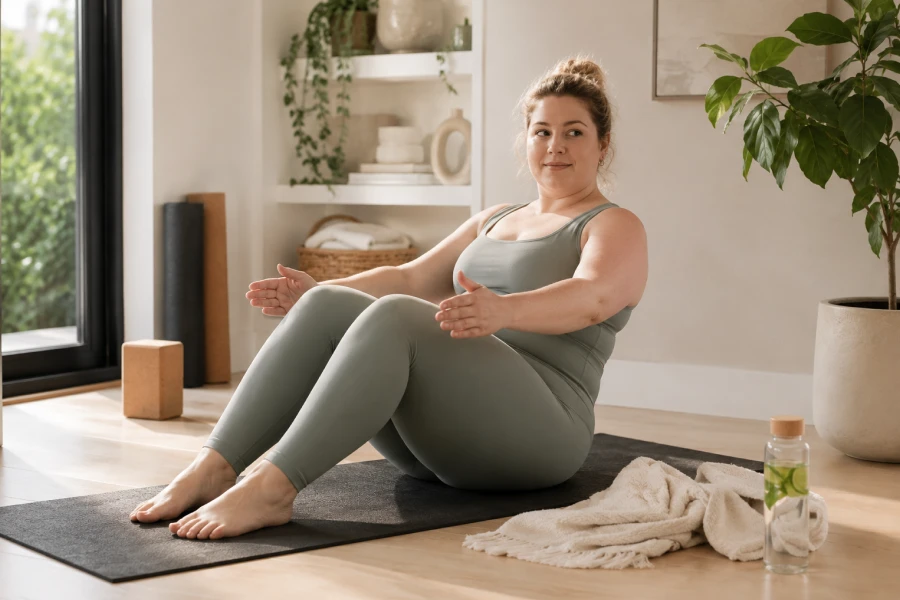
Beginner home pilates offers a calm entry into strength, mobility, and body awareness. The practice does not require advanced flexibility or perfect coordination. It begins with learning how breath, alignment, and control work together. Home sessions let you pause, repeat, and adjust without feeling watched. That freedom can make unfamiliar movement feel less intimidating. Start with a small number of exercises and clear instructions. Give technique more attention than duration or calorie estimates. Progress should feel steady rather than dramatic. A supportive routine builds confidence through successful repetitions. Over time, simple movements create a surprisingly strong foundation. Beginning privately can also make it easier to ask questions through careful repetition. This approach encourages learning without the pressure to perform for anyone else. That reassurance matters during the earliest stages of learning.
Choose a quiet area with enough room to extend fully. A mat provides comfort, but a stable rug may also work. Wear clothing that allows easy movement and clear breathing. Keep the first session short so attention stays sharp. A dependable pilates for beginners resource can reduce uncertainty about exercise order. Watch demonstrations before moving when a position looks unfamiliar. Place the screen at a comfortable viewing angle. Keep a folded towel nearby for neck or knee support. Remove expectations about looking graceful immediately. Preparation should make the session feel safe, simple, and welcoming. That slower pace gives curiosity more room than comparison. A welcoming environment can make the first few sessions feel significantly less intimidating.
Breathing provides the rhythm for many Pilates movements. Inhale with expansion, then exhale through controlled effort. Keep the ribs connected without forcing the abdomen inward. Neutral alignment may feel different from your usual posture. Practice finding it while lying, sitting, and standing. A thoughtful pilates posture exercises sequence can improve awareness without strain. Move slowly enough to notice where tension appears. Relax the jaw, neck, and hands whenever possible. Small corrections matter more than large ranges. These fundamentals help every later exercise feel clearer and more efficient. A clear setup reduces uncertainty before the first movement begins. Repetition helps the nervous system understand patterns that initially seem unfamiliar.
Confidence comes from completing movements with control, not from choosing the hardest version. Begin with supported exercises that create stable contact with the floor. Repeat the same sequence until the setup feels familiar. A manageable low impact home workout can still challenge muscles deeply. Use fewer repetitions when form begins to fade. Take breaks before frustration replaces attention. Compare each session with your previous experience, not someone else’s video. Notice improvements in balance, breathing, and coordination. Confidence grows quietly through evidence that your body can learn. A patient approach makes consistency much more likely. It also creates a small ritual that signals focused time for yourself. Small successes create evidence that patient practice produces meaningful improvement.
Rushing is one of the most common early mistakes. Fast movement can hide poor control and create unnecessary tension. Slow the tempo until each phase feels understandable. Another mistake is holding the breath during effort. Use a gentle exhale to support difficult moments. Avoid pressing the lower back flat during every exercise. Let alignment change only when the movement specifically requires it. Keep shoulders relaxed instead of pulling them aggressively down. Stop if pain feels sharp, sudden, or joint-focused. Simple corrections protect comfort and help the right muscles contribute. Foundational awareness makes later exercises safer and more understandable. Clear corrections also reduce frustration because each change has an understandable purpose.
Three short weekly sessions can create a realistic beginning. Space them apart so the body has time to recover. Use the same basic warm-up each day. Choose one core movement, one hip exercise, and one upper-body pattern. End with gentle mobility and calm breathing. Keep each practice between fifteen and twenty-five minutes initially. Add time only when the current length feels manageable. Leave one or two repetitions in reserve. A repeatable schedule matters more than an ambitious first week. The routine should fit naturally beside work, family, and ordinary fatigue. These early skills continue supporting the practice long after the beginner stage ends. A gentle weekly rhythm leaves enough recovery for the body to adapt comfortably.
Progress when familiar exercises feel controlled and comfortable. Increase repetitions slowly rather than doubling the workload. Longer levers can create challenge without adding equipment. You may also slow the lowering phase of a movement. Add one new exercise at a time. Keep the rest of the session familiar while learning it. Record any movement that consistently feels confusing. Revisit instructions before forcing the position. Progress should improve confidence, not erase it. A strong beginner phase prepares the body for years of varied Pilates practice. Success should feel repeatable rather than dependent on unusually high motivation. The next level should feel like a natural extension, not a sudden test.


Leave a comment