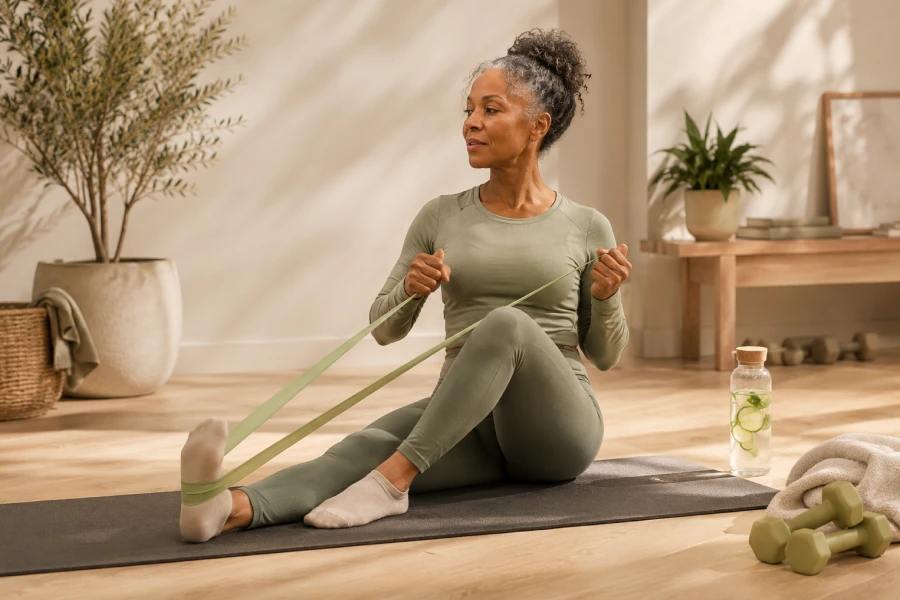
A home pilates routine can bring structure to movement without making fitness feel overwhelming. It combines strength, mobility, breath, and concentration in one adaptable practice. The best routine fits the space, time, and energy you actually have. It should offer enough familiarity to feel easy to begin. At the same time, small progressions keep the body engaged. Home practice allows you to adjust pace without following a crowded class. A clear sequence also reduces decisions once the mat is open. Repetition helps technique improve from week to week. The body begins moving with greater control and less unnecessary tension. That sense of ease often becomes the strongest reason to continue. A familiar sequence can become a reliable reset during both energetic and difficult weeks. That steady relationship with movement can support both confidence and long-term consistency. Over time, the practice can become a dependable source of both energy and calm.
A balanced session should prepare, challenge, and settle the body. Begin with breathing and gentle spinal movement. Add exercises for the trunk, hips, legs, and upper body. A useful full body pilates flow prevents one area from dominating every session. Alternate demanding movements with mobility or position changes. Keep transitions simple enough to preserve concentration. Include both flexion and extension when they feel comfortable. Add rotation and side bending gradually. Finish with slower breathing and stretches that feel restorative. Balance makes the routine feel complete without requiring dozens of exercises. That reliability turns movement into part of life rather than a temporary project. Pacing gives the body time to respond.
Choose exercises that match your current control and available space. Familiar foundational movements should form most of the session. Add one or two newer patterns for interest. A thoughtful pilates flexibility workout element can improve range without turning the practice into passive stretching. Include movements that challenge stability as well as mobility. Use a chair or wall when balance needs support. Avoid collecting exercises that do not connect into a coherent sequence. Each movement should serve a clear purpose. Repetition allows small technical improvements to become noticeable. A concise exercise library often creates better results than constant variety. Balanced programming also keeps the practice interesting without depending on constant novelty. Purposeful selection keeps every minute useful.
Consistency becomes easier when the schedule reflects real life. Choose two or three dependable practice windows each week. Keep one shorter backup window for crowded days. A realistic pilates workout plan should survive travel, deadlines, and fluctuating energy. Put sessions on the calendar without treating them as immovable emergencies. Prepare the mat and clothing beforehand when possible. Use the same starting ritual to reduce hesitation. Fifteen focused minutes can preserve momentum. Longer sessions can return when the week opens up. A sustainable schedule protects continuity without creating guilt. Each section can support the next through thoughtful pacing and exercise order. A visible plan supports follow-through.
Progress should add challenge while preserving control. Increase repetitions only when the final ones remain precise. Slow the tempo to deepen muscular work. Extend a leg or arm farther to create a longer lever. Add light props after bodyweight versions feel stable. Change one variable at a time so feedback stays clear. Keep breathing smooth during the harder variation. Return to an easier option when alignment changes. Progress is not a straight line across every session. Gradual development builds strength without sacrificing the quality that makes Pilates distinctive. Choosing fewer movements creates time to understand them more deeply. Quality makes each progression worthwhile.
Create two versions of the routine before motivation becomes unreliable. The short version can include a warm-up, three exercises, and a closing stretch. The longer version can expand each section with complementary movements. Keep the opening sequence identical so starting feels familiar. Use the short plan on busy or low-energy days. Choose the longer plan when time and concentration are available. Both versions should feel purposeful rather than incomplete. This flexibility removes the all-or-nothing decision. Frequent short sessions can support skill between longer practices. A routine lasts when it offers more than one path to success. Technical familiarity often reveals challenges that were invisible during the first attempts. Flexible options protect the habit.
Variety can renew attention, but too much change slows technical learning. Keep most exercises for several weeks. Replace only one or two movements at a time. Choose additions that address a clear need or goal. Reorder sections when the session begins feeling automatic. Try a different tempo before searching for entirely new exercises. Revisit foundational work whenever control feels inconsistent. Record which sequences leave the body energized and comfortable. Remove movements that repeatedly create confusion without benefit. Thoughtful refreshes keep the practice engaging while preserving the progress built through repetition. Calendar visibility reduces the chance that practice gets postponed by less important tasks. Familiarity and freshness can coexist.

Leave a comment