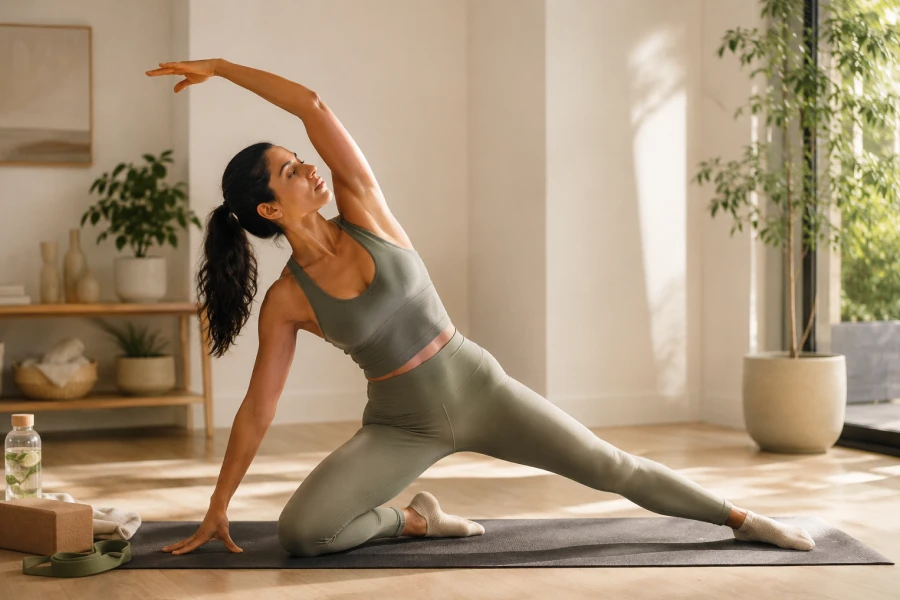
A pilates workout at home can feel focused, challenging, and surprisingly polished. You do not need a studio schedule to build a consistent practice. A clear space, supportive surface, and thoughtful sequence can be enough. Home training also removes commuting and class-timing barriers. That convenience makes shorter sessions more realistic during busy weeks. Technique still matters, so quality should lead every repetition. Slow control often creates more challenge than rushed movement. Breathing helps organize effort and maintain steady attention. A simple structure can balance strength, mobility, and recovery. With repetition, the room becomes a familiar place for purposeful movement. The practice can feel both private and purposeful, which helps many people stay consistent. This familiarity can lower the barrier to beginning. The familiar setting can also make movement feel genuinely restorative.
Choose a space where arms and legs can extend without obstacles. Clear nearby furniture before beginning so movement feels relaxed. Use a mat or supportive surface that does not slide. Keep water close, but remove distracting devices when possible. Comfortable clothing should allow you to notice alignment and breathe freely. A practical at home pilates exercises resource can help organize the session. Position the screen where demonstrations remain visible without twisting your neck. Natural light can make the area feel more inviting. Keep small props together if you plan to use them. A prepared space reduces excuses and helps attention settle quickly. Over time, familiar surroundings may strengthen focus because fewer external details demand attention. Order supports focus before the first repetition.
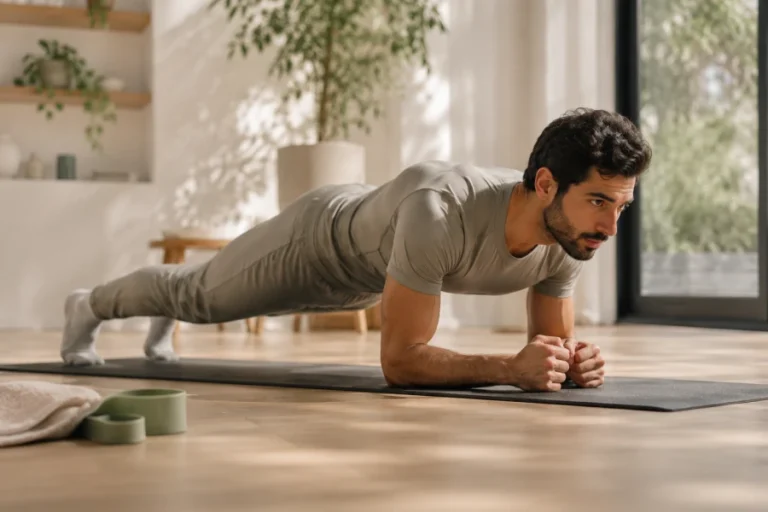
Pilates builds strength through precision, control, and sustained muscular engagement. Start with movements that establish breathing and pelvic stability. Progress toward exercises that challenge the trunk, hips, shoulders, and legs. A reliable core strengthening exercises sequence should prioritize form over speed. Use smaller ranges when alignment begins to change. Rest briefly instead of repeating careless repetitions. Exhale through effort to help organize the movement. Keep the neck relaxed and the shoulders away from the ears. Strength develops when the correct muscles stay involved throughout each phase. Consistent technical practice creates a stronger base for more complex flows. Small environmental choices can make beginning feel almost automatic. Precision turns simple exercises into meaningful strength work.
Flow connects individual exercises into a session that feels coherent. Transitions should support control rather than rush the body. Group movements by position to reduce constant setup changes. Move from supine work into side-lying, seated, kneeling, and standing patterns. A balanced full body pilates flow can alternate effort with mobility. Use breath as the rhythm that links each section. Pause when needed without treating the pause as failure. Smooth sequencing keeps the mind engaged and the body warm. Repeat a familiar flow before adding new complexity. Confidence grows when transitions feel intentional instead of improvised. That ease matters on days when motivation arrives later than expected. A coherent pace also supports mental concentration.
Every exercise should offer a version that matches current strength and mobility. Beginners may keep feet grounded or reduce the range. More experienced practitioners can add longer levers or slower tempos. Pain is not a sign that the exercise is working. Stop and modify when joints feel compressed or unstable. Use a wall, chair, or cushion for support when helpful. Progress one variable at a time. Better control should come before additional repetitions. The most effective session meets the body where it is today. Adaptation protects consistency because the practice remains challenging without becoming discouraging. Controlled effort teaches the body to create tension where it is useful. Respectful adjustments keep the practice accessible.
A brief session can still deliver meaningful movement and mental focus. Choose one warm-up, three main exercises, and one closing stretch. Prioritize the areas that need attention that day. Ten focused minutes often feel better than postponing a longer plan. Keep a short sequence ready for crowded mornings. Use slow tempo to increase challenge without adding more exercises. Remove unnecessary transitions and keep equipment minimal. Finish with one minute of calm breathing. Short practices preserve momentum during unpredictable weeks. Their value compounds because they make returning tomorrow feel easy. It also helps release tension that does not contribute to the exercise. Small sessions still reinforce valuable movement patterns.
Progress in Pilates often appears through control before visible intensity. Notice smoother transitions, steadier breathing, and improved alignment. Observe whether familiar exercises require less tension. Keep a brief record of sessions and challenging movements. Revisit the same sequence every few weeks. Avoid changing every exercise before technique has time to develop. Celebrate consistency alongside strength and flexibility. Some days will feel less coordinated than others. Use those sessions to practice patience rather than judgment. A sustainable home practice grows through curiosity, repetition, and respect for gradual change. Thoughtful transitions make the session feel continuous without sacrificing technical care. Patience allows progress to become durable.

Leave a comment